Understanding Energy Performance Certificates (EPCs): Complete Guide for Property Buyers and Landlords
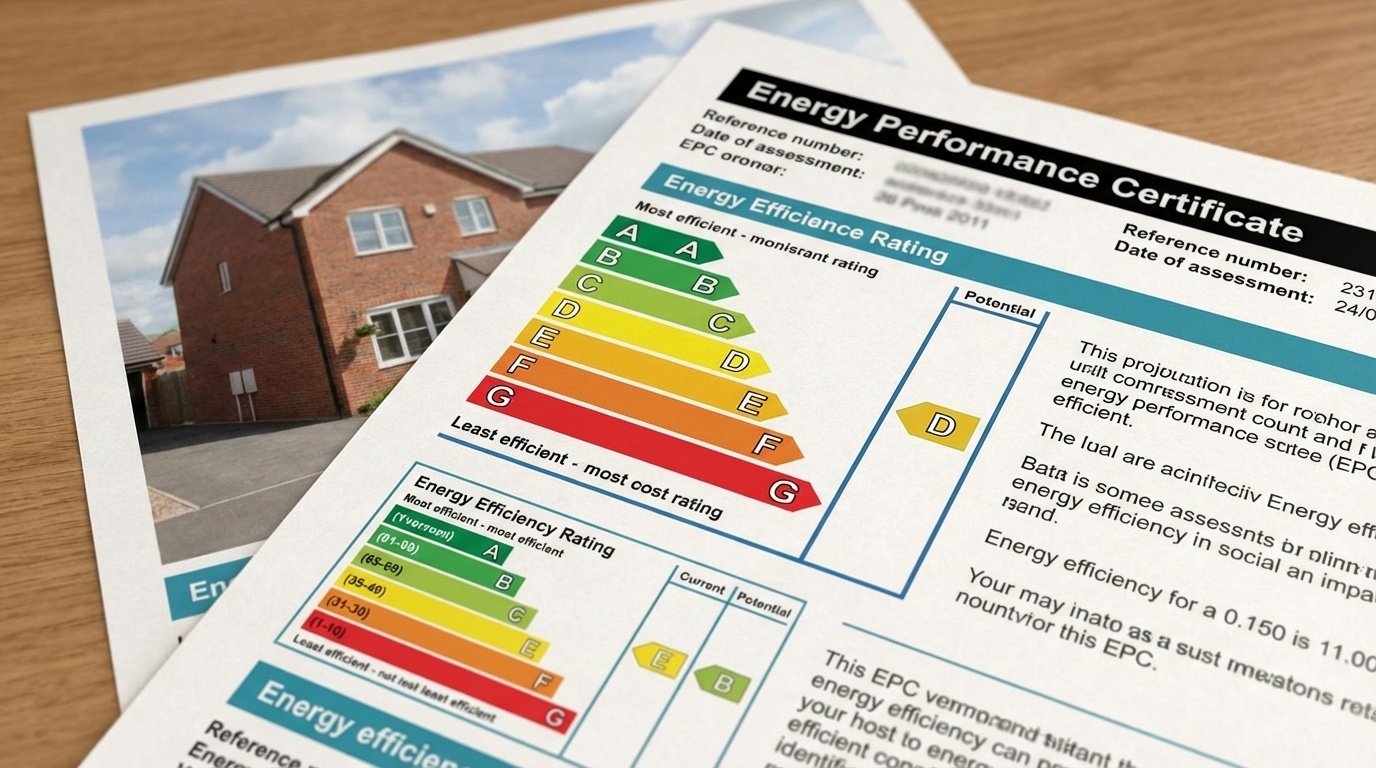
Table of Contents
Energy Performance Certificates (EPCs) have evolved from bureaucratic formality to critical factor in property transactions. With tightening rental standards, rising energy costs, and increasing buyer focus on running costs, your property's EPC rating directly affects its value, rentability, and mortgage eligibility. Yet many property owners don't fully understand what EPCs measure, how ratings are calculated, or what improvements deliver the best return on investment.
Our RICS surveyors assess energy efficiency as part of building surveys and advise on improvement priorities. This comprehensive guide explains everything you need to know about EPCs, from legal requirements to practical improvements that enhance ratings and reduce costs.
What Is an Energy Performance Certificate?
An EPC assesses a property's energy efficiency and provides ratings on a scale from A (most efficient) to G (least efficient). Think of it like the energy labels you see on fridges and washing machines—but for entire buildings.
What EPCs Show
Every EPC includes:
- Current Energy Efficiency Rating: Band A-G based on property's existing condition
- Potential Rating: The band achievable with recommended improvements
- Estimated Energy Costs: Annual fuel bills for lighting, heating, and hot water (standardized calculation, not actual bills)
- Environmental Impact (CO2): Current and potential carbon emissions rating
- Recommendations: Cost-effective improvements to enhance rating
- Property Details: Floor area, construction type, age, heating system
Understanding EPC Ratings
Rating Scale:
- A (92-100): Most efficient - Exceptional insulation, renewable energy, minimal bills
- B (81-91): Very efficient - Modern standards, low running costs
- C (69-80): Good - 2025+ rental standard, increasingly expected by buyers
- D (55-68): Average - Typical for improved older properties
- E (39-54): Below average - Current minimum rental standard
- F (21-38): Poor - Cannot legally rent, urgent improvements needed
- G (1-20): Very poor - Serious energy inefficiency, very high bills
How EPC Ratings Are Calculated
EPCs use the Standard Assessment Procedure (SAP). The assessment considers:
- Heating system: Efficiency of boiler/heating (biggest single factor)
- Insulation levels: Loft, wall, and floor insulation
- Glazing: Single, double, or triple glazing quality
- Lighting: Low-energy bulbs vs traditional
- Hot water system: Efficiency and controls
- Renewable energy: Solar panels, heat pumps
- Building fabric: Air tightness and thermal bridging
Legal Requirements: When You Need an EPC
For Sellers
Must obtain EPC BEFORE marketing property for sale. Required for:
- All property sales (houses, flats, commercial)
- New build properties on completion
- Properties undergoing significant renovation
Penalty: £200 fixed fine for selling without valid EPC
For Landlords
Critical Rental Requirements
Current law (2025):
- Cannot let properties rated F or G
- Minimum rating E required for all tenancies
- From April 2025: Rating C required for NEW tenancies
- From April 2028: Rating C required for ALL tenancies (including existing)
Penalties: Up to £5,000 per property for letting below minimum standard
For Buyers
Not legally required to obtain EPC, but:
- Seller must provide valid EPC before completion
- Check rating BEFORE making offer - affects running costs and rental potential
- Budget for improvements if buying F or G rated property
- Some mortgage lenders refuse loans on F/G rated properties
Exemptions
EPCs not required for:
- Listed buildings (in certain cases)
- Buildings due for demolition
- Temporary buildings (less than 2 years use)
- Stand-alone buildings under 50m²
- Places of worship
How EPC Ratings Affect Property Values
Energy efficiency increasingly influences property prices:
Value Premium for Higher Ratings
- Band C properties: Command 1-3% premium over equivalent Band E
- Band B: 3-5% premium (rare in older stock)
- Band A: 5-8% premium (very rare, usually new build or heavily retrofitted)
Value Discount for Poor Ratings
- Band F: 2-5% discount due to rental restrictions and high bills
- Band G: 5-10% discount - serious impediment to saleability
- Difficult to mortgage (some lenders refuse F/G)
- Cannot be rented until improved to E+
2025+ Market Reality
As minimum rental standard rises to C (2025/2028), expect:
- D-rated properties facing downward price pressure
- C-rated becoming "standard" expectation
- E-rated properties requiring significant improvement investment
- F/G properties becoming unsellable without remediation
Estimated Energy Costs by EPC Rating
| EPC Rating | Annual Energy Cost (2-bed flat) | Annual Energy Cost (3-bed house) |
|---|---|---|
| Band A | £500-£700 | £800-£1,000 |
| Band B | £650-£850 | £1,000-£1,300 |
| Band C | £800-£1,100 | £1,200-£1,600 |
| Band D | £1,100-£1,400 | £1,600-£2,000 |
| Band E | £1,400-£1,800 | £2,000-£2,600 |
| Band F | £1,800-£2,400 | £2,600-£3,400 |
| Band G | £2,400+ | £3,400+ |
Note: These are indicative estimates. Actual costs depend on energy prices, occupancy patterns, and individual usage.
Cost Savings Example
Improving Band E to Band C (3-bed house):
- Annual saving: £400-£1,000
- Over 10 years: £4,000-£10,000
- Plus: Increased property value (1-3% premium)
- Plus: Ability to rent legally post-2025
Improving Your EPC Rating: Cost-Effective Measures
Not all improvements offer equal return on investment. Here's what makes the biggest difference:
High-Impact, Cost-Effective Improvements
1. Boiler Upgrade (Biggest Single Impact)
Upgrade: Old inefficient boiler → Modern condensing combi boiler
- Cost: £2,500-£4,000 installed
- Rating improvement: 10-20 points (e.g., Band E to D)
- Annual saving: £200-£400
- Payback: 7-15 years (plus essential replacement eventually)
2. Loft Insulation
Upgrade: No/thin insulation → 270mm modern insulation
- Cost: £400-£800 (typical house)
- Rating improvement: 5-10 points
- Annual saving: £150-£300
- Payback: 2-5 years
3. Cavity Wall Insulation
Upgrade: Empty cavity walls → Foam/bead insulation
- Cost: £800-£1,500 (3-bed house)
- Rating improvement: 8-15 points
- Annual saving: £200-£400
- Payback: 4-7 years
- Note: Only suitable if property has cavity walls (post-1920s typically)
4. LED Lighting
Upgrade: Halogen/incandescent → LED throughout
- Cost: £50-£150 (whole property)
- Rating improvement: 1-3 points
- Annual saving: £30-£80
- Payback: 1-2 years (easiest win!)
Medium-Impact Improvements
5. Double Glazing
Upgrade: Single glazing → A-rated double glazing
- Cost: £5,000-£10,000 (full 3-bed house)
- Rating improvement: 5-10 points
- Annual saving: £150-£300
- Payback: 20-40 years (but adds property value)
6. Heating Controls
Upgrade: Basic thermostat → Programmer + TRVs + smart controls
- Cost: £300-£600
- Rating improvement: 2-5 points
- Annual saving: £100-£200
- Payback: 3-6 years
High-Impact, Higher-Cost Improvements
7. Solar Panels (Solar PV)
Installation: 3-4kW system
- Cost: £5,000-£8,000
- Rating improvement: 10-20 points
- Annual saving: £300-£600 (electricity bills + export)
- Payback: 10-20 years
8. Air Source Heat Pump
Installation: Replacing gas boiler with heat pump
- Cost: £10,000-£14,000 (after £7,500 BUS grant)
- Rating improvement: 15-25 points
- Annual saving: £200-£500 (depending on system type)
- Best for: Well-insulated properties, works well with underfloor heating
9. Solid Wall Insulation
Installation: External or internal insulation for solid-wall properties
- Cost: £8,000-£15,000 (3-bed house)
- Rating improvement: 15-25 points
- Annual saving: £300-£600
- Payback: 20-35 years
- Challenge: May require planning permission, affects appearance
Real-World Upgrade Example: From Band F to Band C
Victorian Terrace - Hackney
Property: 3-bedroom Victorian terrace, solid walls, single glazing
Starting EPC: Band F (32 points)
Target: Band C (70+ points) for rental compliance post-2025
Annual Energy Costs: £2,800 before improvements
Improvements Made:
| Improvement | Cost | Points Gain |
|---|---|---|
| New condensing combi boiler | £3,200 | +15 |
| Loft insulation (270mm) | £650 | +8 |
| Cavity wall insulation (rear extension only) | £600 | +5 |
| LED lighting throughout | £120 | +2 |
| Programmable thermostat + TRVs | £450 | +3 |
| External solid wall insulation (front only) | £6,500 | +12 |
| Secondary glazing (key rooms) | £2,000 | +5 |
Total Investment: £13,520
Points Gained: +50 points
New EPC Rating: Band C (82 points)
New Annual Energy Costs: £1,400
Annual Saving: £1,400
Simple Payback: 9.7 years
Additional Benefits:
- Property rentable post-2025 (was facing rental ban)
- Improved comfort and warmth
- Increased property value (1-3% premium = £6,000-£18,000 on £600k property)
- Reduced carbon footprint
Owner's Decision: "The £13,500 investment seemed huge initially, but with the 2025 rental restrictions coming, we had no choice. The annual £1,400 saving is substantial, and our tenants are much happier with lower bills. Property is now worth more and legally compliant. Wished we'd done it sooner."
Available Grants and Financial Support
Government and council grants can significantly reduce improvement costs:
Boiler Upgrade Scheme (BUS)
- Grant: £7,500 towards air source heat pump installation
- Eligibility: Replacing fossil fuel heating in residential properties
- Application: Through MCS-certified installer
ECO4 Scheme (Energy Company Obligation)
- For: Low-income households and properties rated D-G
- Covers: Insulation, heating upgrades, sometimes renewable energy
- Cost: Free or heavily subsidized
- Eligibility: Means-tested or property in lower council tax bands
Local Authority Grants
Many London boroughs offer additional support:
- Warmer Homes schemes
- Solar Together (group-buy solar panels at reduced cost)
- Landlord energy efficiency grants
- Check your borough council website for local schemes
Maximizing Grant Support
Strategy:
- Get EPC assessment identifying improvements
- Research available grants BEFORE paying for work
- Use accredited installers (required for grants)
- Combine multiple grants where possible
- Keep all paperwork for tax relief (landlords may deduct against rental income)
Common EPC Mistakes and Myths
Myth 1: "EPCs are just estimates, actual bills will be different"
Reality: EPCs use standardized assumptions (heating to 21°C, hot water usage, etc.). Your actual bills may differ, but EPCs allow fair comparison between properties. The relative difference between Band E and Band C is real.
Myth 2: "I can't improve my EPC without spending £20,000+"
Reality: Many cost-effective improvements exist. Even £500-£1,000 on loft insulation + LED bulbs can gain 7-13 points. Boiler + basic insulation (£4,000-£5,000) often achieves Band E to D jump.
Myth 3: "My property is old/listed, so low EPC is acceptable"
Reality: While some listed buildings have EPC exemptions, most old properties CAN be improved sensitively. Buyers and tenants increasingly expect better ratings regardless of age. From 2025, even old properties must meet Band C rental standard.
Myth 4: "Solar panels always improve EPC significantly"
Reality: Solar panels help, but if basic insulation and heating are poor, improvement is limited. Fix fundamentals first (insulation, efficient heating), then consider renewables.
Myth 5: "I should do all recommended improvements at once"
Reality: Prioritize cost-effective measures first. Loft insulation, boiler upgrade, and LED bulbs give best bang-for-buck. Leave expensive solid wall insulation or triple glazing unless needed for specific target rating.
Common Mistakes
- Not checking EPC before making offer: Discovering Band F after purchase means unexpected costs
- Buying rental property rated F/G: Cannot legally let until improved to E+, becoming C from 2025
- Using non-accredited assessors: EPC must be by accredited energy assessor on official register
- Ignoring EPC recommendations: These show most cost-effective improvements for your specific property
- Not updating EPC after improvements: New EPC (£60-£120) needed to reflect upgrades and improve saleability/rental potential
How Our Building Surveys Address Energy Efficiency
While EPCs provide standardized ratings, our RICS building surveys offer practical, property-specific energy advice:
What Our Surveys Assess
- Current EPC rating review: We check existing EPC and verify accuracy
- Insulation deficiencies: Loft, wall, floor insulation gaps
- Heating system condition: Boiler age, efficiency, expected lifespan
- Glazing condition: Single/double glazing, condition, replacement priority
- Damp and ventilation: Affecting energy efficiency and comfort
- Improvement priorities: What to tackle first for best return
- Realistic cost estimates: For energy efficiency upgrades
Survey + EPC Combined Approach
Best practice for buyers:
- Review seller's EPC before viewing (check rating, recommendations, property details)
- Commission building survey for chosen property
- Survey identifies energy efficiency issues and improvement costs
- Use findings to negotiate price or request improvements
- Budget realistically for energy upgrades post-purchase
Frequently Asked Questions About EPCs
How much does an EPC cost?
Typical costs (2025):
- Small flat: £60-£80
- 2-3 bed house: £80-£120
- Large house (4+ beds): £100-£150
Important: Always use accredited energy assessors on the official EPC register. Cheaper unaccredited assessors produce invalid certificates. EPC valid for 10 years, so £80-£120 cost is minimal (less than £1 per month) for legal compliance and marketing benefit.
How long does an EPC assessment take?
On-site assessment: 30-60 minutes for typical house
Certificate delivery: Usually within 48 hours
The assessor will:
- Measure rooms and property dimensions
- Check heating system type and controls
- Inspect insulation levels (loft, walls where visible)
- Check glazing type (single/double/triple)
- Record lighting types
- Photograph property
No preparation needed - assessor inspects property as-is. Don't need to be present, but helpful for answering questions about heating system.
Can I improve my EPC rating without spending much?
Yes! Low-cost high-impact improvements:
- LED bulbs (£50-£150): Replace all lighting, gain 1-3 EPC points, £30-£80 annual saving
- Loft insulation top-up (£200-£500): If you have thin insulation, topping to 270mm gains 3-8 points
- Heating controls (£200-£400): Add programmer and TRVs, gain 2-5 points
- Draught-proofing (£100-£300): Seal windows, doors, letterboxes - improves comfort and saves money
Total: £550-£1,350 can gain 6-16 EPC points - enough to jump from Band E to D in many cases.
What if I can't afford to improve my F/G rated rental property?
You have limited options:
- Apply for grants: ECO4 scheme may cover costs if eligible
- Claim exemption: If all recommended improvements installed and still below E, can register 5-year exemption (must have spent at least £3,500)
- "All improvements made" exemption: If you've installed all measures with 7-year payback and still below E
- Sell the property: If cannot afford improvements and no exemption applies
Reality: From 2025 (Band C requirement), exemptions become harder. Most landlords will need to invest £5,000-£15,000 to meet standards or exit market.
Does EPC affect my property value?
Yes, increasingly significant:
Premium for higher ratings:
- Band C: +1-3% vs Band E
- Band B: +3-5% vs Band E
- Band A: +5-8% vs Band E
Discount for poor ratings:
- Band F: -2-5% (rental restrictions, high bills)
- Band G: -5-10% (seriously affects marketability)
Future trend: As 2025 Band C rental requirement approaches, expect D and E properties to face stronger downward pressure. Buyers factoring improvement costs into offers.
How do I find a legitimate EPC assessor?
Use the official EPC register:
- Visit www.epcregister.com
- Use "Find an assessor" tool
- Enter your postcode
- Choose from accredited assessors
Warning signs of dodgy assessors:
- Not on official register
- Offering EPCs without site visit
- Suspiciously cheap (under £60)
- Cannot provide accreditation details
- Offering to "guarantee" specific rating
Legitimate assessors: Must be accredited by approved scheme, carry ID, conduct proper site assessment, and lodge certificate on official register within 5 days.
Should I get a new EPC after making improvements?
Yes, absolutely - if improvements are significant:
Get new EPC if you've:
- Installed new boiler
- Added loft or wall insulation
- Replaced windows with double/triple glazing
- Installed solar panels or heat pump
- Made multiple smaller improvements combined
Benefits:
- Higher rating improves marketability
- May unlock rental legality (if was below E)
- Demonstrates investment to buyers/tenants
- Only costs £80-£120 for potential significant value/rental benefit
Timing: Wait until all planned works complete to get single updated EPC rather than multiple assessments.
What's the difference between EPC and building survey?
EPC (Energy Performance Certificate):
- Legal requirement for selling/letting
- Standardized energy efficiency rating (A-G)
- 30-60 minute assessment
- Cost: £60-£120
- Valid: 10 years
- Focus: Energy efficiency only
Building Survey (RICS Level 3):
- Optional but recommended for buyers
- Comprehensive structural condition assessment
- 2-4 hour detailed inspection
- Cost: £600-£900+
- One-time report for purchase
- Focus: Structure, condition, defects, repairs, costs
Recommendation: Buyers should obtain BOTH. EPC shows energy efficiency (running costs); building survey shows structural condition (capital costs). Together provide complete property picture.
Need Expert Property Survey Advice?
Our RICS surveyors provide comprehensive building surveys including energy efficiency assessments, improvement priorities, and realistic cost estimates for upgrades. We help you understand true property running costs and investment needs.
Book Your Building SurveyBuilding surveys from £600 | Energy efficiency advice included | Fast turnaround