Electrical Safety: What Property Surveys Check in London Homes
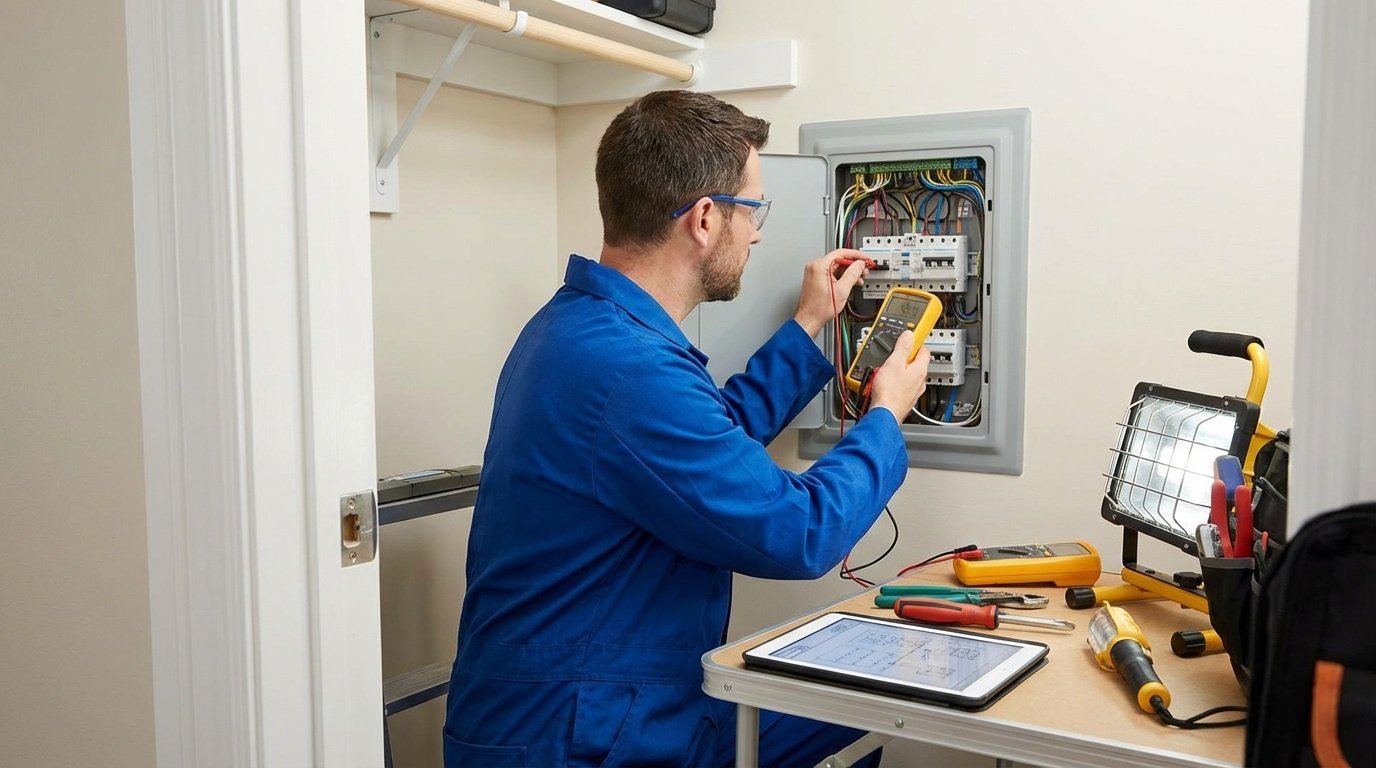
Outdated or unsafe electrical wiring is a fire risk and affects insurance, making electrical safety a critical concern for London surveyors during property surveys. Our RICS chartered building surveyors explain what we check, warning signs of electrical problems, rewiring costs, and EICR certificate requirements to help homebuyers make safe, informed decisions.
Electrical installations deteriorate over time, and many London properties—particularly Victorian and Edwardian houses—have outdated wiring that doesn't meet current safety standards. Faulty electrics cause approximately 12,500 house fires annually in the UK. Professional building surveys identify electrical concerns, though detailed electrical testing requires specialist electricians. Understanding electrical safety helps buyers avoid dangerous properties and budget for necessary upgrades.
What Surveyors Check: Electrical Assessments
During building surveys, our chartered surveyors conduct visual electrical inspections:
Consumer Unit (Fuse Box)
The consumer unit is the heart of the electrical system:
Modern consumer units (safe):
- MCBs (Miniature Circuit Breakers) - switch-type protection
- RCD protection (Residual Current Device) - prevents electrocution
- Labeled circuits clearly
- Metal casing (since 2016 regulations)
- Typically installed within last 10-15 years
Old-style fuse boxes (concerning):
- Ceramic or bakelite rewirable fuses
- No RCD protection
- Wooden backing boards
- Often 40+ years old
- Unsafe by modern standards
Our expert surveyors photograph consumer units and identify whether upgrades are needed. Modern consumer unit replacement costs £400-£800—essential for safe electrical systems.
Wiring Age and Type
Wiring has limited lifespan. Our RICS surveyors identify:
Modern wiring (post-1970s):
- PVC-insulated cables (typically white or gray)
- Earthed system throughout
- Expected 25-30 year lifespan
- Generally safe if in good condition
Outdated wiring (pre-1970):
- Rubber or fabric-insulated cables: Insulation perishes, exposing live wires (major fire risk)
- Lead-sheathed cables: Very old (pre-1950), definitely needs replacement
- No earth protection: Two-core cables lacking safety earth
- Aluminum wiring (1960s-70s): Can develop high-resistance connections causing overheating
Rubber and fabric insulation becomes brittle and cracks, exposing dangerous live wires. Our team of London surveyors see this frequently in period properties and always recommend rewiring.
Socket and Switch Condition
Visual inspection reveals safety issues:
- Old round-pin sockets: Indicate very old wiring (pre-1947)
- Two-pin sockets: No earth connection (unsafe)
- Cracked or damaged faceplates: Expose live parts
- Overloaded sockets: Multiple adaptors creating fire risk
- Discolored sockets: Heat damage indicating overloading or loose connections
- Lack of sockets: Too few sockets encourages dangerous extension lead use
Bathroom and Kitchen Safety
Special regulations apply in "wet areas":
- Bathroom zones: Regulations specify what electrical fittings allowed where
- RCD protection required: For all bathroom circuits
- Pull-cord switches: Not standard switches in bathrooms
- IP-rated fittings: Water-resistant equipment needed
Our chartered building surveyors identify obvious non-compliances, though detailed assessment requires qualified electricians.
Earthing and Bonding
Proper earthing is essential for safety:
- Main earthing terminal: Connection to earth system
- Bonding to services: Gas and water pipes must be bonded
- Cross-bonding in bathrooms: All metal parts bonded together
Missing or inadequate bonding is common in older properties and must be rectified.
Warning Signs of Electrical Problems
During property viewings, watch for these danger signs:
Immediate Concerns (Dangerous):
- Burning smells: From sockets, switches, or consumer unit
- Scorch marks: On sockets or switch plates
- Flickering lights: When appliances switched on
- Buzzing sounds: From electrical fittings
- Frequent trips: Circuit breakers regularly tripping
- Shocks: Tingling from appliances or fittings
- Visible bare wires: Exposed conductors
Medium Concerns (Upgrade Needed):
- Old-style fuse box with rewirable fuses
- Two-pin sockets
- Fabric or rubber-insulated cables visible
- No RCD protection
- Very few sockets (forcing extension lead use)
- Wiring over 40 years old
Lower Concerns (Monitor):
- Wiring 25-40 years old
- Consumer unit 15-20 years old
- No recent electrical safety certificate
- Some older socket styles mixed with newer
Our expert surveyors grade electrical concerns in survey reports, helping clients prioritize safety improvements.
EICR Certificates: Essential Safety Documentation
Electrical Installation Condition Reports (EICR) provide comprehensive electrical safety assessment:
What is an EICR?
Professional inspection by qualified electricians:
- Visual inspection: All accessible electrical installations
- Testing: Using specialist equipment to check circuits, earthing, insulation
- Assessment: Against current wiring regulations
- Report: Detailed findings with safety classifications
EICR Outcome Classifications:
- Satisfactory: Installation safe for continued use
- Unsatisfactory: Requires remedial work
- C1 (Danger present): Immediate action required
- C2 (Potentially dangerous): Urgent remedial action required
- C3 (Improvement recommended): Non-urgent improvement advised
When EICRs Are Required:
- Rental properties: Mandatory every 5 years (since 2020)
- Property sales: Increasingly requested by buyers and lenders
- Insurance: Some insurers require recent certificates
- Mortgage applications: Lenders may require for older properties
- After major work: Following rewiring or significant changes
- Periodic checks: Every 10 years for owner-occupied homes (recommended)
EICR Costs:
- Small flat (1-2 bedrooms): £150-£250
- Average house (3 bedrooms): £200-£350
- Large house (4+ bedrooms): £300-£500
Our RICS surveyors recommend EICR certificates for any property with electrical concerns or where installation age is uncertain. The £200-£350 cost provides definitive assessment and may be essential for mortgage approval.
Rewiring Costs and What's Involved
Full rewiring is major work. Our team of London surveyors explains realistic costs:
Complete House Rewiring:
2-bedroom flat: £3,000-£4,500
- 2-3 days work
- New consumer unit
- Complete cable replacement
- Modern sockets and switches
- Testing and certification
3-bedroom terraced house: £4,000-£6,000
- 4-6 days work
- Three floors typically
- Making good after cable routing
4-bedroom detached house: £6,000-£10,000
- 1-2 weeks work
- Larger property, more circuits
- Potentially more disruption
What Rewiring Involves:
First fix (before plastering):
- Strip out old wiring
- Route new cables through walls, floors, ceilings
- Install back boxes for sockets and switches
- Install new consumer unit
Second fix (after plastering/decoration):
- Connect sockets, switches, lights
- Final connections in consumer unit
- Testing and commissioning
- Certification
Additional Costs:
- Redecoration: £1,000-£3,000 (walls chased for cables need making good)
- Carpets/flooring: May need lifting and replacing
- Temporary accommodation: Some choose to move out during work
Partial Rewiring Options:
Sometimes partial work acceptable:
- Consumer unit upgrade: £400-£800 (provides RCD protection)
- Rewiring high-risk areas: Kitchen, bathroom circuits (£1,500-£3,000)
- Upgrading specific circuits: Rather than whole house
Our chartered building surveyors advise whether partial work is safe or complete rewiring necessary. Budget constraints are understandable, but electrical safety can't be compromised.
Age-Related Electrical Issues
Different property ages have characteristic electrical issues:
Victorian/Edwardian Houses (Pre-1918)
- Often rewired in 1950s-70s (now outdated)
- May have mixture of old and newer wiring
- Inadequate number of circuits for modern living
- Assume rewiring needed unless recent EICR confirms otherwise
Inter-War Properties (1918-1945)
- Original wiring definitely outdated
- May have two-pin sockets
- Lead-sheathed cables possible
- High probability of needed rewiring
Post-War (1945-1970)
- Rubber-insulated wiring common (now perished)
- Aluminum wiring in some 1960s-70s properties
- May lack RCD protection
- Rewiring or significant upgrades usually needed
1970s-1990s
- PVC wiring introduced
- Better but now 30-50+ years old
- May lack modern RCD protection
- Consumer unit upgrade often sufficient
- Full rewiring depends on condition
Post-2000
- Modern standards applied
- RCD protection standard
- Should have recent EICR certificate
- Unlikely to need major work
Insurance and Electrical Safety
Home insurance is affected by electrical installation condition:
Insurance Requirements:
- Most insurers ask about electrical installation age
- Some require EICR for wiring over 30-40 years old
- May refuse cover or charge higher premiums for very old wiring
- Claims may be rejected if unsafe wiring contributed
Declaring Electrical Work:
- Rewiring should be declared to insurance
- DIY electrical work may invalidate insurance
- Only certified electricians for notifiable work
- Building regulations certificates required
Our expert surveyors identify electrical issues affecting insurance, helping buyers understand full costs including potentially higher premiums.
Building Regulations and Certification
Electrical work must comply with Building Regulations Part P:
Notifiable Work (Requires Certification):
- New circuits
- Consumer unit replacement
- Work in bathrooms or kitchens
- Outdoor electrical installations
Who Can Do Notifiable Work:
- Registered electricians: Self-certify their work
- Building Control approval: If using non-registered electrician (adds £300-£500 cost)
Certification Required:
- Electrical Installation Certificate (EIC) for new work
- Minor Works Certificate for small jobs
- These prove work meets regulations
- Essential for property sales and insurance
Our RICS surveyors check whether recent electrical work has proper certification—lack of certificates is a red flag.
Modern Electrical Features Buyers Expect
Modern living requires adequate electrical provision:
Minimum Socket Provision:
- Living rooms: 6-8 double sockets
- Kitchens: 10-12 sockets plus dedicated appliance circuits
- Bedrooms: 4-6 double sockets
- Bathrooms: Shaver socket only (special regulations apply)
Modern Expectations:
- USB charging sockets
- Sufficient circuits to avoid overloading
- Smart home compatibility
- Electric vehicle charging point provision
- Adequate lighting circuits
Properties with inadequate socket provision require expensive additional circuits—factor this into purchase decisions.
Negotiating Based on Electrical Issues
Our chartered building surveyors help clients negotiate:
If Complete Rewiring Needed:
- Request £5,000-£8,000 price reduction (typical rewiring plus contingency)
- Consider walking away if property already at market top
- Factor disruption and decoration costs
If Consumer Unit Upgrade Needed:
- Request £800-£1,200 reduction
- Or ask seller to complete before completion
- Relatively quick work (1 day)
If EICR Shows Issues:
- Use specific identified defects to negotiate
- Get quotes for remedial work
- Request reduction equivalent to repair costs
Concerned About Electrical Safety?
Get a professional building survey from RICS chartered surveyors who identify electrical concerns
Book Your Survey Today