Buying a Converted Flat: What Your Survey Should Check
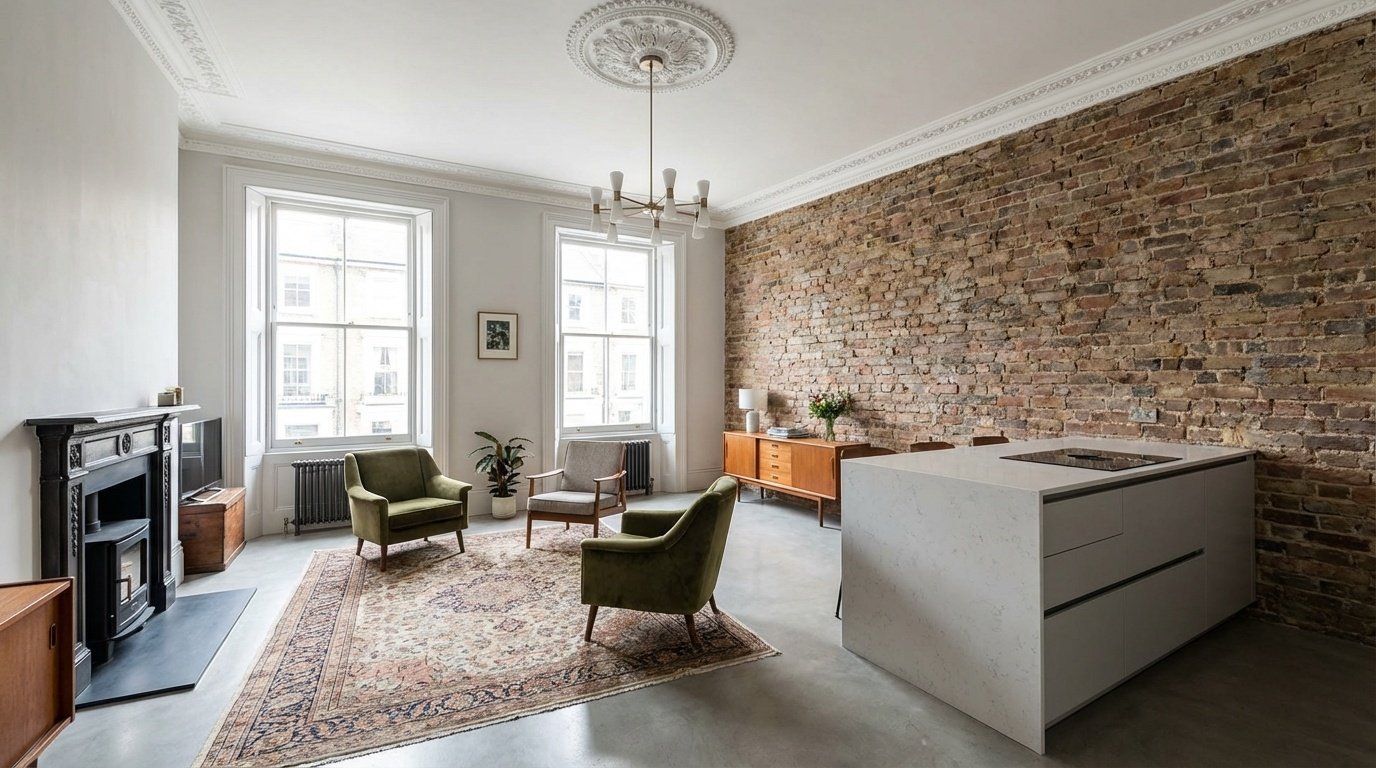
Converted flats are popular in London, offering period charm at lower prices than purpose-built flats, but they come with specific issues that London surveyors must check carefully. Our RICS chartered building surveyors explain the critical aspects of converted flat purchases, from building regulations compliance to sound insulation problems, helping buyers avoid expensive mistakes.
London has thousands of converted flats—Victorian and Edwardian houses divided into multiple dwellings. These conversions range from professional, fully-compliant work to DIY disasters that create serious problems for occupants. Understanding what to check before buying is essential, and professional building surveys from expert surveyors are even more critical for conversions than for purpose-built flats.
What is a Converted Flat?
A converted flat is created when a building originally designed as a single dwelling (usually a house) is subdivided into separate self-contained flats. Common conversion scenarios in London:
- Victorian/Edwardian terraced houses: Split into 2-4 flats (ground floor, first floor, basement, top floor)
- Large detached houses: Divided into multiple apartments
- Commercial buildings: Former shops, offices, or warehouses converted to residential
- Period mansions: Grand properties split into numerous flats
Conversion quality varies enormously: Professional conversions by developers follow building regulations and create attractive, functional homes. Amateur DIY conversions may ignore regulations entirely, creating properties that are uncomfortable, unsafe, and difficult to mortgage or sell.
Our team of London surveyors has surveyed hundreds of converted flats, and we know exactly what problems to look for during property surveys.
Building Regulations Compliance: The Critical Issue
The most important question our chartered building surveyors ask about conversions: does it have building regulations approval?
What Building Regulations Cover:
When houses are converted to flats, building regulations require:
- Fire safety: Fire-resistant partitions, escape routes, fire doors, alarms
- Sound insulation: Minimum standards for floors and walls between flats
- Structural integrity: Ensuring structure can support conversion
- Damp-proofing: Adequate protection against moisture
- Ventilation: Proper ventilation in all habitable rooms
- Energy efficiency: Insulation and heating standards
- Drainage: Adequate provision for each flat
Completion Certificate: Essential Documentation
Properly completed conversions receive a Building Regulations Completion Certificate from the local authority. This confirms:
- Plans were submitted and approved
- Work was inspected during construction
- Final inspection confirmed compliance
- Conversion meets current regulations
Mortgage implications: Many lenders refuse mortgages on conversions without building regulations approval. Some lenders accept indemnity insurance policies, but these cost £500-£2,000 and don't solve the underlying problems—they just protect against enforcement action by the local authority.
Retrospective Applications
If a conversion was done without building regulations approval, it's sometimes possible to apply retrospectively for a Regularisation Certificate. However:
- The local authority may refuse if work doesn't meet standards
- Invasive investigation may be required (opening walls/ceilings)
- Significant remedial work may be needed
- Costs can be £5,000-£25,000+ depending on deficiencies
- No guarantee of approval
Our RICS surveyors identify whether building regulations approval exists and advise on implications if it doesn't. This is absolutely critical information for buyers.
Sound Insulation: The Biggest Complaint
Poor sound insulation is the number one problem with converted flats. Our expert surveyors explain why and what to check:
Why Conversions Have Sound Problems:
Victorian houses were built as single dwellings. Internal floors and walls provide minimal sound resistance:
- Original timber floors: Offer almost no sound insulation between flats
- Single-skin walls: Between rooms (now between flats) lack soundproofing
- No acoustic design: Original construction never considered occupants above/below
Building Regulations Requirements:
Modern building regulations (Approved Document E) require:
- Airborne sound insulation: Minimum 45dB reduction between flats
- Impact sound insulation: Maximum 62dB transmission (footsteps, furniture moving)
Meeting these standards requires:
- Resilient bar systems on ceilings
- Acoustic insulation between joists
- Floating floors with acoustic underlay
- Double-layer plasterboard on sound-resistant frames for walls
- Sealing all acoustic bypasses (pipes, cables, gaps)
Real-World Impact:
Poor sound insulation means:
- Hearing neighbors' conversations, TV, music
- Every footstep from flat above audible
- Toilets flushing, doors closing, drawers shutting all heard
- Impossible to have quiet enjoyment of your property
- Relationship tensions with neighbors
- Reduced property value and resale difficulty
Cost to improve sound insulation: £3,000-£8,000 per room for ceilings, £1,500-£4,000 per wall for party walls. Often the downstairs neighbor's ceiling needs work too, creating complications and costs you can't control.
What Surveyors Check:
Our chartered surveyors assess:
- Evidence of acoustic improvements (resilient bars, floating floors visible)
- Floor/ceiling construction type
- Party wall construction
- Building regulations approval (which should include acoustic testing results)
- Warning signs of poor insulation (carpet underlay visible indicating floating floor—good sign)
Our recommendation: Always visit converted flats multiple times, including evenings/weekends when neighbors are home. Listen carefully for noise levels. Our team of London surveyors can't test acoustic performance without specialist equipment, but we assess likely performance based on construction.
Fire Safety: Essential Protection
Fire safety in converted flats is strictly regulated. Our RICS surveyors check compliance during property surveys:
Fire Safety Requirements:
1. Fire-Resistant Partitions:
- Walls and floors separating flats must provide 30-60 minutes fire resistance
- All penetrations (pipes, cables) must be fire-stopped
- Original lath-and-plaster construction often inadequate
2. Fire Doors:
- Entrance doors to flats must be FD30 fire doors (30-minute resistance)
- Properly fitted with intumescent strips and smoke seals
- Self-closing mechanisms required in common areas
3. Escape Routes:
- Protected escape route from all flats to final exit
- Common escape stairs must be enclosed and fire-protected
- Alternative escape from top floors if single staircase
- Emergency lighting in common areas
4. Fire Detection:
- Interlinked smoke alarms throughout each flat
- Heat detectors in kitchens
- Mains-powered with battery backup
- Common area detection systems
Post-Grenfell Regulations:
Following the Grenfell Tower tragedy, fire safety requirements have intensified:
- External wall system assessments required for taller buildings
- Stricter enforcement of existing regulations
- Resident safety information requirements
- Regular fire risk assessments for common areas
While Grenfell specifically involved high-rise cladding, the focus on fire safety affects all multi-occupancy buildings including converted houses.
Warning Signs of Poor Fire Safety:
- Standard doors (not fire doors) as flat entrances
- Open staircases without fire protection
- Storage or bicycles blocking escape routes
- Missing or inappropriate fire alarms
- Gaps around pipes through floors/walls
Legal implications: Landlords (freeholders) have legal obligations under the Fire Safety Order 2005. Failure to comply can result in prosecution. As a leaseholder, you're affected if the freeholder hasn't met their obligations—the building may be unsafe and difficult to mortgage or sell.
Shared Services: Complications and Costs
Converted flats often share services in ways purpose-built flats don't. Our expert surveyors explain the issues:
Heating Systems:
Common scenarios:
- Shared boiler: One boiler serves multiple flats (nightmare for maintenance and costs)
- Individual boilers: Each flat has own heating (better but check location)
- Original single system: Not properly separated during conversion
Problems with shared boilers:
- Disagreements about temperature settings
- Unequal heating costs (some flats warmer than others)
- Complex arrangements for maintenance and replacement
- When boiler fails, all flats affected
- Difficult to get agreements for upgrades/replacement
Replacement costs: Installing separate boilers if currently shared: £3,000-£5,000 per flat. Usually requires all leaseholders' agreement and shared costs.
Water Supply:
- Individual meters preferable (each flat pays for their usage)
- Shared meters create disputes about usage
- Water pressure issues common in conversions (upper floors affected)
- Shared cold water tanks in loft spaces
Drainage:
- Original single soil stack may serve multiple flats
- Blockages affect all connected flats
- Maintenance responsibility disputes
- Unpleasant odors if not properly designed
Electrical Supply:
- Separate consumer units required for each flat
- Original electrical installation may not support multiple dwellings
- Shared lighting in common areas (who pays?)
Our chartered building surveyors investigate service arrangements and highlight potential problems. Shared services often lead to disputes and unexpected costs.
Structural Considerations
Converting a house to flats can affect structural integrity. Our RICS surveyors check:
Removed Walls:
- Internal walls may have been removed to create open-plan layouts
- If load-bearing walls removed, adequate support must be provided
- Building regulations approval should confirm structural adequacy
- Cracks or sagging may indicate inadequate support
Floor Strengthening:
- Original floors designed for single dwelling loading
- Multiple separate dwellings increase load (more furniture, appliances, people)
- Building regulations may require floor strengthening
- Bouncy or sagging floors indicate potential problems
Roof Structure:
- Loft conversions often accompany house-to-flat conversions
- Roof structure modifications must be properly designed
- Steel beams and proper support essential
Damp and Maintenance
Damp problems are common in converted flats. Our team of London surveyors identifies causes:
Common Damp Issues:
- Basement/ground floor flats: Rising damp, lack of damp-proof course
- Top floor flats: Roof leaks, poor gutter maintenance
- External walls: Poor pointing, render defects
- Shared responsibility confusion: Who fixes external problems?
Maintenance Complications:
- Freeholder may be absent or uninterested
- Getting leaseholders to agree on repairs difficult
- No sinking fund for major works
- Maintenance of common parts neglected
- Insurance may be inadequate or absent
Lease Terms and Management
Converted flat leases often differ from purpose-built flat leases. Our chartered surveyors review:
Lease Length:
- Many conversion leases created decades ago
- May now be short leases requiring extension
- Check remaining lease term carefully
Service Charges:
- Often minimal or non-existent in small conversions
- Can lead to maintenance disputes and neglect
- No management company in many cases
Repairing Obligations:
- Exactly what each leaseholder vs freeholder must maintain
- Ambiguous lease terms create disputes
- Our expert surveyors recommend full lease review
What to Check Before Buying
Our RICS surveyors recommend checking these critical points:
Essential Questions:
- Does the conversion have building regulations approval? (Request certificate)
- What are the heating arrangements? (Shared or individual?)
- Are services separately metered? (Water, electricity, gas)
- What are the fire safety provisions? (Request fire risk assessment if available)
- How is building maintenance managed? (Who organizes repairs?)
- Are there service charges? (How much and what do they cover?)
- What is the freeholder like? (Engaged or absent?)
- Have neighbors had disputes? (Try to speak with existing residents)
Multiple Viewings:
- Visit at different times (day, evening, weekend)
- Listen for noise from neighbors
- Check for damp smells
- Inspect common areas maintenance
- Speak with neighbors about their experience
Professional Survey Essential:
Converted flats require Level 3 building surveys from experienced chartered surveyors who understand conversion-specific issues. Level 2 surveys aren't detailed enough. Our team of London surveyors conducts thorough inspections covering all aspects of conversions.
Red Flags to Walk Away
Some conversion problems are deal-breakers. Our expert surveyors advise walking away if:
- No building regulations approval and regularization impossible
- Severe fire safety deficiencies (non-fire doors, inadequate escape)
- Major structural problems (sagging floors, removed load-bearing walls without support)
- Shared heating with no resolution possible
- Completely absent freeholder/no management structure
- Serious sound insulation problems and no budget to fix
- Mortgage lender refuses to lend
Some problems are fixable with price reductions or seller commitments. Others make properties unmortgageable and unsellable. Professional advice from RICS surveyors helps you distinguish between manageable issues and deal-breakers.
Buying a Converted Flat?
Get a comprehensive Level 3 survey from surveyors who understand conversion-specific issues
Book Your Conversion Survey