Subsidence in London: What Every Property Buyer Must Know
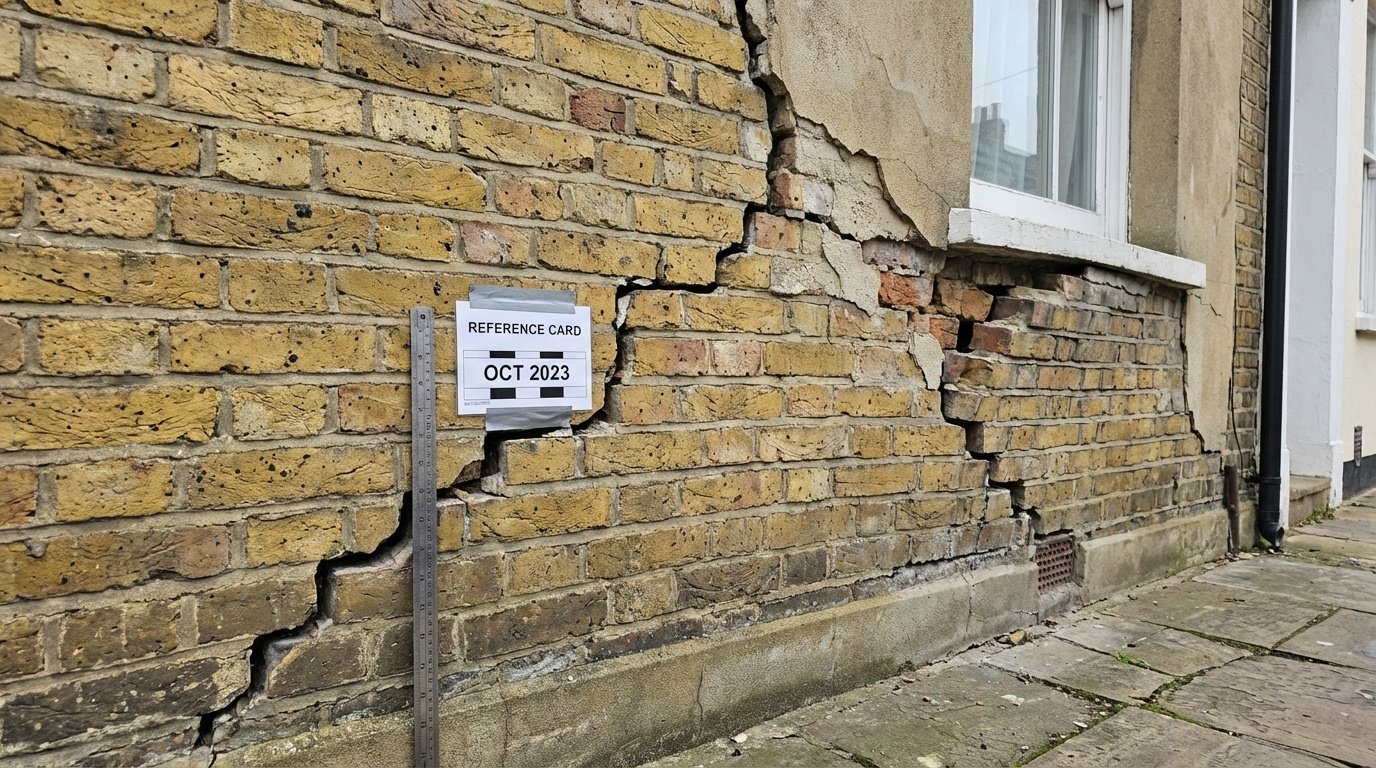
Subsidence is one of the most serious structural issues that can affect a property, and London surveyors regularly encounter it during building surveys. Understanding subsidence is crucial for anyone looking to buy a property in London, as it can significantly impact property values, mortgage availability, and repair costs.
When our RICS chartered surveyors conduct property surveys across London, subsidence is always a key concern. This comprehensive guide explains everything you need to know about subsidence: what it is, how to spot it, what causes it, treatment options, and how it affects your property purchase.
What Is Subsidence?
Subsidence occurs when the ground beneath a building sinks or moves downward, taking the property's foundations with it. This downward movement causes structural damage as the building tries to stay in its original position while the ground beneath shifts.
It's important to distinguish subsidence from other types of structural movement:
Subsidence: Downward movement of the ground beneath the building. Usually caused by soil shrinkage, moisture changes, or ground instability. This is the most serious type.
Settlement: Normal downward movement that occurs in new buildings as they "bed in" to the ground. This is expected and usually harmless, happening in the first few years after construction.
Heave: Upward movement of the ground, often caused by clay soil expanding after tree removal. Less common than subsidence but equally damaging.
Our team of RICS surveyors see subsidence most frequently in areas of London with clay soil, particularly during hot, dry summers when soil shrinkage is most severe.
Recognizing the Warning Signs of Subsidence
When chartered building surveyors conduct a Level 3 building survey or RICS Level 2 survey, they look for specific indicators of subsidence. Here's what expert surveyors watch for:
Cracks in Walls
Not all cracks indicate subsidence, but certain patterns are warning signs:
Diagonal cracks: These typically run at a 45-degree angle and are wider at the top than the bottom. They often appear near doors and windows where the structure is weakest.
Width matters: Cracks wider than 3mm (about the width of a £1 coin) need investigation. Cracks over 15mm are serious and indicate significant movement.
Progressive cracks: New cracks or existing cracks that are widening suggest active movement. Old, stable cracks may be historic and dormant.
Pattern and location: Subsidence cracks often appear in a stepped pattern through mortar joints. External walls are usually affected first, especially at corners where stress concentrates.
Doors and Windows
Structural movement affects door and window frames:
- Doors that suddenly stick or won't close properly
- Gaps appearing around door or window frames
- Windows that won't open or close smoothly
- Distorted or twisted frames
Other Warning Signs
Experienced surveyors in London also look for:
- Rippling or bulging wallpaper that can't be explained by dampness
- Cracks in internal plasterwork, especially if they match external cracks
- Sloping or uneven floors
- Gaps between walls and ceilings or floors
- Extensions pulling away from the main building
During property surveys, our chartered surveyors use specialist equipment to measure crack widths and assess whether movement is active or historic.
Common Causes of Subsidence in London
Understanding why subsidence occurs helps property buyers assess risk. Our surveyors provide expert advice on these common causes:
1. Clay Soil Shrinkage
This is the most frequent cause of subsidence in London and the surrounding areas. Clay soil expands when wet and shrinks when dry. During hot, dry summers, clay can shrink significantly, causing the ground to sink.
Areas of London with clay soil include large parts of North London, West London, and South London. Properties built on London Clay are particularly vulnerable.
2. Tree Root Damage
Trees draw moisture from soil, causing it to shrink. This is especially problematic with:
- Oak trees (can draw water from 30 meters away)
- Willow trees (very thirsty, affecting soil up to 40 meters distant)
- Poplar trees (fast-growing with extensive root systems)
- Elm trees (widespread roots)
The relationship between trees and buildings is complex. Trees closer than their mature height to a building can cause problems. For example, an oak that grows to 20 meters tall shouldn't be within 20 meters of your property.
3. Leaking Drains
Broken or leaking drains can wash away soil beneath foundations, creating voids. Water from leaking pipes can also soften clay soil, reducing its load-bearing capacity.
During drainage surveys, our surveyors use CCTV cameras to inspect underground pipes and identify leaks that might contribute to subsidence.
4. Poorly Compacted Fill
Properties built on filled ground (especially old quarries, pits, or landfill) can experience settlement as the fill compacts over time. This is less common but can be severe.
5. Mining Activity
While less common in central London, some areas have historic mining activity that can cause ground movement decades or centuries later.
How Subsidence Affects Property Values
When homebuyers discover subsidence through a building survey, it significantly impacts the purchase decision:
Property valuation: Properties with current subsidence problems typically see values drop by 20-25%. Even properties with treated subsidence may have valuations 10-15% lower than comparable properties without history of subsidence.
Marketability: Properties with subsidence are harder to sell. Many potential buyers walk away immediately upon hearing "subsidence," even if the problem has been fully resolved.
Stigma effect: Subsidence history remains on property records indefinitely. Even decades after successful treatment, it must be disclosed to future purchasers, affecting long-term value.
Our RICS registered valuers consider all these factors when providing property valuations for mortgage purposes or purchase decisions.
Mortgage and Insurance Implications
Getting a Mortgage
Subsidence creates challenges for homebuyers needing a mortgage:
Active subsidence: Most lenders won't provide mortgages on properties with ongoing subsidence until it's been treated and stabilized. Your surveyor's report will be sent to the lender, who will almost certainly decline the application.
Treated subsidence: Properties with historical subsidence that's been properly treated can usually be mortgaged, but lenders require:
- Engineer's reports confirming successful treatment
- Evidence of monitoring showing no further movement
- Insurance covering subsidence
- Often a retention (holding back part of the mortgage) until full documentation is provided
Buildings Insurance
Subsidence dramatically affects insurance:
Higher premiums: Properties with subsidence history typically pay 50-200% more for buildings insurance.
Excesses: Subsidence insurance excesses are usually £1,000-£2,500, compared to standard excesses of £100-250.
Limited coverage: Some insurers won't cover properties with subsidence history at all. Others exclude subsidence from the policy entirely.
Disclosure requirements: You must disclose subsidence history to insurers. Failing to do so invalidates your policy.
Subsidence Treatment Options and Costs
Treatment depends on the cause and severity. Our chartered building surveyors recommend appropriate specialists based on survey findings.
Underpinning
This is the most common and expensive treatment. Underpinning involves extending foundations to a deeper, more stable level of soil or bedrock.
Process: Sections of foundation are excavated, filled with concrete, and allowed to cure before moving to the next section.
Cost: £10,000-£50,000+ depending on property size and severity. A typical semi-detached house costs £15,000-£25,000.
Duration: Usually takes 6-12 weeks.
Guarantee: Most underpinning comes with a 10-year insurance-backed guarantee.
Tree Management
If trees are the cause, options include:
Tree removal: Removing the problem tree stops moisture extraction. However, this can cause heave as soil re-expands. Cost: £500-£3,000 per tree.
Root barriers: Physical or chemical barriers prevent roots reaching the property. Cost: £1,000-£5,000.
Crown reduction: Reducing the tree's size reduces water demand. Must be done professionally. Cost: £300-£1,500.
Drain Repair
If leaking drains are identified during drainage surveys:
- Pipe relining: £800-£2,000
- Drain replacement: £2,000-£6,000
- Full drainage system overhaul: £5,000-£15,000
Monitoring
Sometimes the recommended approach is simply to monitor movement:
When appropriate: For minor cracks, historic movement, or situations where the cause has been removed (tree felled, drain repaired).
Method: Crack monitoring studs or glass tell-tales are installed. The surveyor checks these periodically (typically 12 months minimum).
Cost: £500-£2,000 for professional monitoring over 12 months.
Should You Buy a Property With Subsidence?
This is a question our team of chartered surveyors is asked frequently. The answer isn't straightforward—it depends on several factors:
When to Consider Buying
Treated and stable: If subsidence has been professionally treated, monitored, and shown to be stable for at least 12 months, it may be acceptable. Ensure you receive:
- Structural engineer's reports
- Proof of insurance-backed guarantees
- Monitoring records showing no further movement
- Buildings insurance quote before committing
Significant price reduction: If the seller offers a substantial discount (typically 20-30% off market value), it might compensate for future insurance costs and reduced resale value.
Cash buyer: If you're not relying on a mortgage, you have more flexibility. However, future buyers will likely need mortgages, affecting resale.
When to Walk Away
Active, untreated subsidence: Unless you're prepared to fund treatment yourself (and wait months for completion), avoid properties with ongoing subsidence.
Unclear cause: If the surveyor can't identify why subsidence occurred, treatment may not be effective, and the problem could recur.
Multiple structural issues: Subsidence combined with other problems (severe damp, roof defects, electrical issues) creates compounding costs and complications.
Can't get insurance: If you can't obtain buildings insurance at any price, don't proceed. It's too risky.
Questions to Ask Before Buying
If your building survey identifies subsidence, ask the seller:
- When was subsidence first noticed?
- What caused it?
- What treatment was carried out and by whom?
- Are there structural engineer's reports available?
- Is there an insurance-backed guarantee, and how long does it last?
- Has monitoring been conducted? Can we see the results?
- What does their buildings insurance cost now?
- Will they provide indemnity insurance?
Your solicitor should also conduct thorough searches to identify any insurance claims history related to the property.
How Our London Surveyors Identify Subsidence
When you commission a professional survey from our RICS chartered surveyors, here's how we assess subsidence risk:
External Inspection
We examine all external walls, looking for crack patterns, distortion, and movement. We note:
- Crack locations, widths, and directions
- Proximity of trees and their species
- Ground levels and drainage
- Condition of rendered or painted surfaces that might hide cracks
Internal Inspection
Inside, we check:
- Floor levels using a spirit level
- Internal plasterwork for cracks
- Doors and windows for fit and operation
- Staircase alignment
Contextual Assessment
Our surveyors provide professional service by considering:
- Property age and construction type
- Soil type in the area (many parts of London have clay soil)
- History of the property and area
- Weather patterns (dry summers increase risk)
Recommendations
Based on findings, we recommend:
- Further investigation by structural engineers if needed
- Monitoring strategies
- Specialist reports (arboriculturalist for trees, drainage surveys for pipes)
- Appropriate action before purchase completion
Preventing Subsidence
While you can't entirely prevent subsidence, our expert surveyors recommend these steps to minimize risk:
Tree Management
- Don't plant large trees close to your property (maintain distance equal to mature height)
- Regularly prune established trees to control size and water demand
- Think carefully before removing large trees—this can cause heave
Drainage Maintenance
- Have drains inspected every 5-10 years
- Fix leaks promptly
- Keep gutters and downpipes clear and in good repair
- Ensure drainage directs water away from foundations
Foundation Care
- Avoid excavations close to foundations
- Don't remove soil from around foundations
- Monitor for early signs of movement
- Address minor cracks before they become major problems
Subsidence vs Settlement: Understanding the Difference
Many homebuyers worry unnecessarily when they see cracks, so it's important to understand what's normal:
Normal settlement cracks:
- Occur in first 5-10 years after construction
- Usually hairline or very fine
- Often appear near doors and windows
- Stabilize and don't worsen
- Typically cosmetic only
Subsidence cracks:
- Can occur at any time
- Usually wider (3mm+)
- Often diagonal and stepped
- Progressive (get worse over time)
- Indicate structural movement
A Level 3 building survey from our chartered building surveyors will distinguish between harmless settlement and serious subsidence.
Real Case Study: North London Victorian Terrace
To illustrate how subsidence affects property purchases, here's a real example from our surveyors' experience:
Property: Victorian terrace in North London, offered at £650,000
Survey findings: Our RICS Level 3 survey identified diagonal cracking to the rear wall, widest at first-floor level (8mm width). We noted a large oak tree in the rear garden approximately 12 meters from the property.
Recommendations: We advised obtaining a structural engineer's report and arboriculturalist's assessment.
Further investigations revealed:
- Active subsidence caused by tree root activity
- Clay soil shrinkage exacerbated by the tree
- Treatment cost estimate: £22,000 (underpinning) plus £1,500 (tree management)
Outcome: The buyer negotiated a £60,000 price reduction. They proceeded with the purchase at £590,000, completed underpinning works, and established 12-month monitoring. Two years later, the property was valued at £675,000—they ended up ahead financially despite the subsidence.
This shows that subsidence doesn't automatically mean walking away, but it does require expert advice, appropriate price adjustment, and professional treatment.
Frequently Asked Questions About Subsidence
How common is subsidence in London?
Subsidence affects approximately 1 in 50 properties in London at some point. It's more common in areas with clay soil and during hot, dry summers. Our surveyors in London encounter suspected subsidence in about 5-10% of building surveys, though many cases are minor or historic.
Does home insurance cover subsidence?
Most standard buildings insurance policies include subsidence cover, but with high excesses (£1,000-£2,500) and specific exclusions. Damage caused by poor maintenance or within certain distances of trees may not be covered. Always read your policy carefully.
How long does subsidence take to repair?
Underpinning typically takes 6-12 weeks for a standard property. However, the entire process from identification through investigation, treatment, and monitoring can take 18-24 months before lenders and insurers consider the property stable.
Can subsidence be fixed permanently?
When properly treated by addressing the cause and strengthening foundations, subsidence can be permanently resolved. However, the property will always have a subsidence history, affecting insurance and future sales.
Will subsidence get worse if I do nothing?
Not necessarily. Some subsidence is historic and dormant—movement has stopped and won't recur. However, active subsidence will worsen if left untreated, potentially causing severe structural damage and making the property unsafe or unmortgageable.
Final Thoughts: Making an Informed Decision
Subsidence is understandably worrying for homebuyers. The key is getting accurate information from experienced chartered surveyors who can assess whether you're facing a minor historic issue or a major current problem.
Our team of RICS surveyors has decades of combined experience identifying and assessing subsidence across London homes. We provide detailed survey reports that help you understand exactly what you're dealing with and make informed decisions.
Remember:
- Not all cracks mean subsidence
- Treated subsidence isn't necessarily a deal-breaker
- Active subsidence requires professional treatment before purchase
- Always get expert advice before proceeding with a property showing signs of movement
Whether you need a Level 2 home survey or comprehensive Level 3 building survey, our chartered building surveyors in London provide the expertise you need to buy a property with confidence.
Related Articles:
Concerned About Subsidence?
Get a professional building survey from our RICS chartered surveyors
Book Your Survey Today