Common Roof Problems Found in London Property Surveys: A Complete Guide
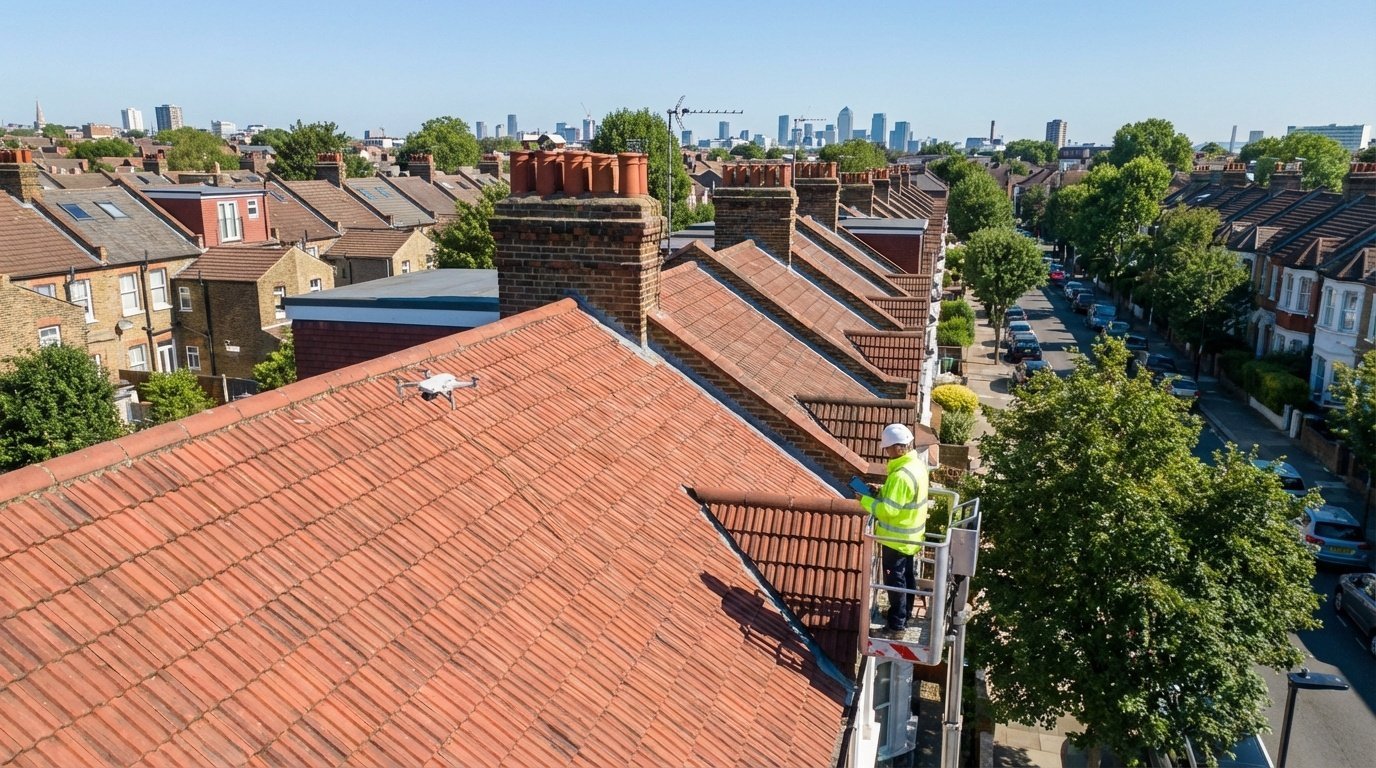
Roof defects are among the most expensive property issues London surveyors identify, with repair costs ranging from hundreds to tens of thousands of pounds. Our chartered building surveyors explain the common roof problems in London homes, warning signs to watch for, and realistic repair costs to help homebuyers make informed decisions.
The roof is your property's primary defense against London's weather—rain, wind, and occasional snow. When roofs fail, the consequences cascade through the entire property: water damage, damp, rot, and structural problems. That's why professional building surveys always include thorough roof assessments from expert surveyors.
Why Roof Problems Are So Common in London
London's housing stock includes properties from every era, from Georgian townhouses to Victorian terraces to modern flats. Many roofs are original or decades old, and our RICS surveyors regularly find problems during property surveys:
- Age: Many London properties are 100+ years old with roofs past their design life
- Weather exposure: Rain, wind, and temperature fluctuations deteriorate roofing materials
- Poor maintenance: Many owners neglect roof maintenance until problems become severe
- DIY repairs: Amateur fixes often make problems worse
- Structural movement: Old buildings settle and move, stressing roof structures
Our team of London surveyors conducts hundreds of roof inspections annually, identifying problems before buyers commit to purchases that could cost tens of thousands in unforeseen repairs.
Most Common Roof Problems in London Properties
1. Missing, Slipped, or Damaged Tiles/Slates
The most frequent issue: Individual roof coverings becoming loose, damaged, or missing entirely. Victorian and Edwardian properties typically have slate roofs, while newer properties use concrete or clay tiles.
Causes:
- Wind damage during storms
- Deterioration of fixing nails (especially on slate roofs 100+ years old)
- Frost damage causing tiles to crack
- People walking on roofs inappropriately
- Impact from falling tree branches
Warning signs: Missing tiles visible from ground level, internal water stains on ceilings (especially after rain), tiles or pieces found in gutters or gardens.
Repair costs:
- Replacing a few tiles: £200-£500 (minimum call-out charges apply)
- Replacing 20-50 tiles: £500-£1,500
- Full re-roofing (terraced house): £5,000-£8,000
- Full re-roofing (detached house): £8,000-£15,000+
Slate roofs require matching slates, which can be expensive. Modern concrete tiles are cheaper but may not match period properties aesthetically. Our chartered surveyors assess whether repairs or full replacement is most cost-effective.
2. Deteriorating Flashings
Flashings are weatherproof barriers—usually lead, zinc, or felt—where the roof meets other structures: walls, chimneys, dormers, or roof valleys. They're critical for preventing water ingress.
Common flashing problems:
- Lead flashings: Can deteriorate, crack, or be stolen (lead theft is common in London)
- Mortar fillets: Instead of proper flashings, some properties use cement mortar which cracks and fails
- Inadequate overlap: Poorly installed flashings don't provide sufficient water protection
- Corroded fixings: Flashings pulling away from walls
Warning signs: Damp patches on walls or ceilings near chimneys, water stains in roof spaces, gaps visible where flashings meet walls.
Repair costs:
- Re-pointing around chimney: £200-£400
- Replacing lead flashings (one chimney): £800-£1,500
- Complete re-flashing (terraced house): £2,000-£4,000
Lead is expensive (currently £2-£3 per kg), and proper installation is skilled work. Our RICS surveyors identify failing flashings early—catching problems before they cause interior damage saves money.
3. Sagging Roof Structure
Visible sagging indicates serious structural problems. London surveyors treat this as a major defect requiring urgent attention.
Causes:
- Timber decay: Roof timbers affected by wet rot or beetle infestation
- Overloading: Heavy concrete tiles replacing lighter slates without structural upgrading
- Inadequate original construction: Under-sized timbers common in older properties
- Structural movement: Building settlement affecting roof geometry
- Removed supports: Walls or chimneys removed without proper alternative support
Warning signs: Visible dips or sagging visible from street level, cracks in ceilings following roofline, doors or windows sticking due to structural movement.
Repair costs:
- Reinforcing timbers: £3,000-£8,000
- Partial roof reconstruction: £8,000-£15,000
- Complete roof reconstruction: £15,000-£35,000+
Sagging roofs often require structural engineer involvement. Our chartered building surveyors recommend specialist inspections when significant structural concerns are identified during property surveys.
4. Damaged or Deteriorating Chimney Stacks
Many London properties have chimney stacks, and these above-roofline structures face extreme weather exposure. Chimney problems are common in our building surveys.
Common chimney defects:
- Loose or missing pots: Chimney pots (the terracotta tops) can become loose or crack
- Deteriorated pointing: Mortar between bricks erodes, allowing water penetration
- Leaning stacks: Structural instability, potentially dangerous
- Missing or damaged flashings: (covered above)
- Internal flue damage: Cracked flue liners allowing smoke or water penetration
Warning signs: Visible deterioration from ground level, loose brickwork, leaning, damp patches on chimney breasts indoors, debris falling into fireplaces.
Repair costs:
- Re-pointing one stack: £500-£1,200
- Replacing chimney pots: £300-£600 per pot
- Rebuilding above roofline: £2,000-£4,000 per stack
- Complete removal: £1,500-£3,000 (including making good roof)
Chimney work requires scaffolding, significantly increasing costs. Our team of London surveyors assess whether chimneys can be repaired economically or if removal and capping is more cost-effective.
5. Flat Roof Failures
Many London properties have flat roofs over extensions, garages, or dormer windows. Flat roofs have shorter lifespans than pitched roofs—typically 10-20 years depending on construction.
Common flat roof problems:
- Felt degradation: Traditional felt roofs crack, blister, and fail
- Ponding water: Inadequate falls (slope) causing water to pool
- Failed joints/seams: Where felt sections join, leaks develop
- Inadequate upstands: Where flat roofs meet walls, insufficient height causes water ingress
- Surface damage: Blistering, cracking, or physical damage from walking on roof
Warning signs: Water stains on ceilings below flat roofs, visible deterioration (blistering, cracks), water collecting on roof surface.
Repair costs:
- Patch repairs: £200-£500 (temporary fix only)
- Re-covering small flat roof (garage): £800-£1,500
- Re-covering medium flat roof (extension): £1,500-£3,500
- GRP fiberglass covering (longer lasting): £2,500-£5,000
Flat roofs are often end-of-life by the time properties are surveyed. Our expert surveyors help buyers budget for replacements, especially important for properties with multiple flat roof areas.
6. Poor Ventilation Causing Condensation
Modern improvements—loft conversions, insulation, room-in-roof designs—often reduce roof space ventilation. This causes condensation, which our chartered surveyors identify as a growing problem in London properties.
Problems caused by poor ventilation:
- Condensation on underside of roof coverings
- Timber rot in roof structures
- Mold growth on timbers and in insulation
- Deterioration of insulation effectiveness
- Damp and mold in habitable roof spaces
Warning signs: Musty smells in roof spaces, visible mold on timber, dampness on underside of roofing felt, water droplets on cold surfaces.
Solutions and costs:
- Installing soffit vents: £300-£800
- Adding ridge vents: £500-£1,500
- Breathable roofing membrane: £2,000-£5,000 (when re-roofing)
- Treating affected timbers: £500-£2,000
Ventilation issues are subtle—you need professional surveyors to inspect roof spaces properly. DIY loft conversions often lack proper ventilation, creating problems that manifest years later.
7. Failed or Inadequate Roof Valleys
Roof valleys—where two roof slopes meet—are vulnerable to leaks. They channel large volumes of water and require proper construction.
Valley problems:
- Lead or zinc linings failed: Splits, holes, or corrosion
- Mortar bedded valleys: Old technique that cracks and fails
- Inadequate lapping: Joints in valley linings allowing water through
- Debris accumulation: Leaves and moss blocking water flow
Repair costs:
- Re-lining one valley with lead: £1,000-£2,500
- Multiple valleys: £3,000-£6,000
Valley leaks cause extensive interior damage if not addressed. Our RICS surveyors inspect valleys carefully—they're high-risk areas in building surveys.
8. Moss, Algae, and Vegetation Growth
While not immediately dangerous, organic growth on roofs indicates maintenance neglect and can cause accelerated deterioration.
Problems caused:
- Moss retains moisture, accelerating tile deterioration
- Roots grow under tiles, lifting them
- Blocked gutters from moss washing down
- Increased weight load on roof structure
- Aesthetic deterioration
Treatment costs:
- Moss removal and treatment: £300-£800
- Gutter cleaning: £100-£200
Regular maintenance prevents moss problems. Our chartered building surveyors note heavy moss growth as evidence of maintenance neglect, often indicating other deferred maintenance issues.
Warning Signs You Can Spot Before Buying
Before instructing London surveyors for a full survey, look for these warning signs during property viewings:
External Warning Signs:
- Missing or slipped tiles visible from ground
- Sagging roofline or ridge
- Chimney leaning or visibly deteriorated
- Heavy moss or vegetation growth
- Damaged or missing guttering
- Cracks in external walls near roofline
Internal Warning Signs:
- Water stains on ceilings (brown or yellow marks)
- Recent ceiling repairs or paint (possibly hiding issues)
- Damp or musty smell in top-floor rooms
- Mold in corners of top-floor rooms
- Buckets or containers catching drips
- Cracks in ceilings radiating from one point
Questions to Ask:
- When was the roof last replaced or significantly repaired?
- Have there been any roof leaks? (Sellers must disclose known issues)
- Is there any building guarantee or warranty for roof work?
- When were gutters last cleaned?
If you spot warning signs, mention them to your surveyor—it helps focus the survey inspection on problem areas.
What Surveyors Check During Roof Inspections
Professional building surveys include thorough roof assessments. Our RICS chartered surveyors examine:
External Inspection (from ground level with binoculars):
- Roof covering condition (tiles/slates)
- Roof geometry and structural alignment
- Chimney stacks condition
- Flashings at all junctions
- Ridge tiles and hip tiles
- Valleys and guttering
- Soffit and fascia boards
Internal Inspection (from inside roof space):
- Roof timber condition (rafters, purlins, ridge boards)
- Evidence of leaks or water staining
- Insulation type and thickness
- Ventilation adequacy
- Signs of condensation or rot
- Evidence of beetle infestation
- Roof structure adequacy
- Water tanks, pipework, and electrical wiring in roof space
Limitations: Surveyors inspect from ground level and accessible roof spaces only. We don't climb on roofs (safety and insurance reasons) or lift tiles. If concerns are identified, we may recommend specialist roofing contractor inspections.
Our detailed reports include photographs, clear descriptions of defects, severity ratings, and estimated repair costs. This helps you make informed decisions and negotiate with sellers if significant problems are found.
When to Walk Away vs. Negotiate
Our team of London surveyors helps clients understand which roof problems are manageable and which should prompt reconsideration:
Manageable Issues (Negotiate Price Reduction):
- Missing or damaged tiles (£500-£2,000 repairs)
- Deteriorating flashings (£2,000-£4,000 repairs)
- End-of-life flat roofs (£2,000-£5,000 replacement)
- Chimney re-pointing needed (£500-£1,500)
For these issues, request price reductions equivalent to repair costs, or ask sellers to complete repairs before completion.
Serious Issues (Consider Walking Away):
- Significant structural sagging (£15,000-£35,000+ repairs)
- Extensive roof timber rot (£10,000-£25,000+ repairs)
- Complete re-roofing needed immediately (£8,000-£20,000+)
- Dangerous chimney stacks requiring urgent removal
Major roof problems are expensive and disruptive. Unless the property is priced accordingly, expert surveyors often advise clients to find alternatives rather than take on massive repair bills.
Preventing Roof Problems
Once you own a property, regular maintenance prevents expensive repairs:
Annual Checks:
- Visual inspection from ground level (binoculars useful)
- Clean gutters and downpipes (autumn and spring)
- Check for missing or damaged tiles after storms
- Inspect roof space for leaks or dampness
- Check flashings around chimneys
Every 5 Years:
- Professional roof inspection by chartered surveyors
- Check and replace deteriorated pointing
- Assess flat roof condition
- Consider moss treatment if growth is significant
Maintenance Budget:
Budget £500-£1,000 annually for routine roof maintenance and repairs. This prevents small issues becoming major problems.
Concerned About a Property's Roof?
Get a professional building survey from experienced RICS chartered surveyors
Book Your Survey Today