Thermal Imaging Surveys: Are They Worth the Investment?
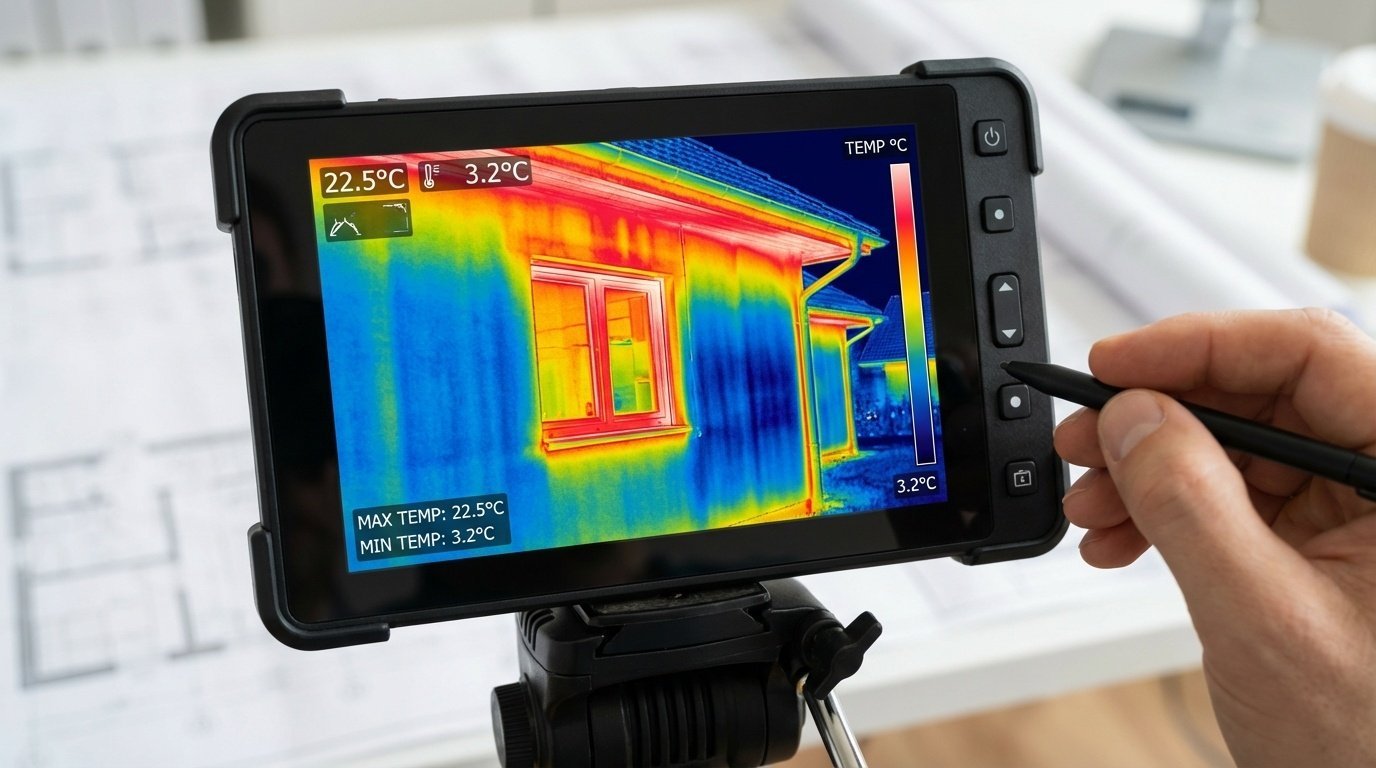
Thermal imaging reveals hidden defects invisible to the naked eye, helping London surveyors identify damp, insulation problems, and energy efficiency issues during property surveys. Our RICS chartered building surveyors explain when thermal imaging adds value to surveys, what it can detect, realistic costs, and important limitations buyers should understand before commissioning this specialist service.
Thermal imaging cameras detect infrared radiation (heat), creating visual images showing temperature differences across surfaces. This technology, once reserved for military and industrial applications, is now used by expert surveyors to identify property defects that traditional visual inspections might miss. But thermal imaging isn't magic—it has specific applications where it excels and limitations buyers need to understand.
How Thermal Imaging Works
Thermal imaging cameras (also called infrared cameras) detect heat rather than visible light. They display temperature differences as colored images:
- Warm areas: Typically shown as red, orange, or yellow
- Cool areas: Shown as blue, purple, or black
- Temperature scale: Usually covering 10-20°C range
Key principle: Different materials, moisture levels, and air movement create temperature variations. By identifying these variations, our chartered surveyors can detect underlying problems invisible to visual inspection.
Important limitation: Thermal cameras show temperature differences, not causes. Interpreting thermal images requires expertise—our team of London surveyors combines thermal imaging with professional knowledge to diagnose actual problems.
What Thermal Imaging Can Detect
Our RICS surveyors use thermal imaging to identify:
1. Hidden Moisture and Damp
Most valuable application: Moisture evaporation causes cooling, so damp areas appear cooler than surrounding dry surfaces.
Damp issues thermal imaging reveals:
- Roof leaks: Water penetration through roofs shows as cold spots on ceilings
- Plumbing leaks: Hidden pipe leaks behind walls or under floors
- Rising damp: Moisture rising through walls creates distinctive patterns
- Penetrating damp: Water ingress through external walls
- Condensation patterns: Areas prone to condensation damp
Real example: We surveyed a Clapham flat where owners reported intermittent ceiling staining. Visual inspection showed old water marks but no active dampness. Thermal imaging revealed cold areas indicating hidden moisture still present behind the ceiling—a roof leak that hadn't been properly fixed, just painted over.
Advantage over moisture meters: Thermal imaging scans large areas quickly, identifying problem locations before detailed moisture meter testing. It's particularly useful for high ceilings or areas that are difficult to access.
2. Missing or Inadequate Insulation
Heat loss through poorly insulated areas creates temperature differences our expert surveyors can detect:
- Loft insulation gaps: Missing or compressed insulation visible on ceilings
- Cavity wall insulation: Voids in cavity wall insulation show as cold patches
- Window/door gaps: Air leakage around frames
- Thermal bridging: Cold spots where structural elements conduct heat (steel beams, concrete lintels)
- Suspended floor gaps: Cold drafts through floorboard gaps
Energy efficiency benefit: Identifying heat loss areas helps prioritize insulation improvements, reducing heating bills. A £300 thermal survey could identify £500-£2,000 annual energy savings from improved insulation.
3. Air Leakage and Drafts
Moving air creates temperature changes thermal cameras detect:
- Gaps around windows and doors
- Service penetrations (pipes, cables) not properly sealed
- Chimney drafts
- Loft hatch air leakage
- Ventilation system problems
Air leakage wastes energy and creates comfort problems. Our chartered building surveyors identify sealing opportunities that improve both energy efficiency and comfort.
4. Heating System Faults
Thermal imaging reveals heating system problems:
- Radiator cold spots: Indicating air locks or blockages
- Underfloor heating: Checking coverage and identifying faults
- Boiler efficiency: Heat loss from boiler casing
- Pipework issues: Leaks or poor insulation on heating pipes
5. Electrical Hotspots
Electrical faults generate heat thermal cameras detect:
- Overloaded circuits
- Loose connections generating resistance heating
- Faulty components in consumer units
- Overheating electrical cables
Safety benefit: Electrical hotspots are fire risks. Early detection prevents potential fires. Our RICS surveyors recommend electrical contractor inspection if hotspots are identified.
6. Structural Problems
Some structural issues create temperature variations:
- Delamination: Render or plaster separated from walls (creates air gaps showing as temperature differences)
- Cavity wall tie corrosion: Sometimes visible as patterns on external walls
- Floor voids: Gaps under screeds or floating floors
Limitations of Thermal Imaging
Thermal imaging isn't a magic solution. Our team of London surveyors explains the important limitations:
1. Temperature Differential Required
Critical requirement: Thermal imaging only works when there's a temperature difference between inside and outside (typically 10°C minimum).
Best conditions:
- Cold outside, warm inside (winter is ideal)
- Heating on inside for several hours before survey
- Morning surveys before sun heats external walls
Poor conditions:
- Mild weather (spring/autumn)
- After sunny days (solar gain masks problems)
- Summer (minimal temperature difference)
Our expert surveyors won't conduct thermal imaging in unsuitable conditions—it's pointless and potentially misleading.
2. Surface Temperature Only
Thermal cameras show surface temperatures, not what's behind surfaces:
- Can't see through walls
- Can't detect problems deep within structures
- Surface conditions affect readings (shiny surfaces, recent decoration)
3. Interpretation Expertise Essential
Thermal images can be misleading without proper interpretation:
- Many factors cause temperature variations
- False positives are common
- Understanding building physics essential
- Experience distinguishes real problems from artifacts
Our chartered surveyors combine thermal imaging with traditional inspection methods and professional expertise—thermal imaging is a tool, not a replacement for surveyor knowledge.
4. Access Required
Thermal cameras need direct line of sight:
- Can't see behind furniture or belongings
- Limited use in cluttered properties
- Some areas may be inaccessible
5. Doesn't Identify Causes
Thermal imaging shows symptoms, not causes:
- Cold spot might be damp—but from where?
- Further investigation usually needed
- Invasive investigation may be required to confirm
When Thermal Imaging Adds Value
Our RICS surveyors recommend thermal imaging in these situations:
Definitely Worth It:
- Suspected damp with no obvious source: Thermal imaging excels at locating hidden moisture
- Flat roofs: Identifying water pooling or insulation defects
- Recent water damage: Checking whether drying is complete
- Energy efficiency assessment: Before insulation improvements
- Historic buildings: Checking insulation without invasive investigation
- Post-renovation: Verifying insulation installation quality
Potentially Useful:
- Older properties (pre-1920): Identifying construction issues
- Properties with high energy bills: Finding heat loss causes
- Converted flats: Checking sound insulation installations
- Suspected plumbing leaks: Locating hidden pipe problems
Not Worth It:
- Modern well-built properties: In good condition with no specific concerns
- Summer surveys: Insufficient temperature differential
- Properties with obvious problems: Visible issues don't need thermal imaging to identify
- When visual inspection sufficient: Not all surveys benefit from thermal imaging
Our team of London surveyors advises honestly whether thermal imaging will add value for your specific property—we don't recommend unnecessary additional costs.
Costs and Value
Thermal imaging survey costs in London:
As Part of Building Survey:
- Additional cost: £150-£300 added to survey fee
- Value: Integrated with comprehensive inspection
- Recommendation: Most cost-effective approach
Stand-Alone Thermal Survey:
- Cost: £300-£600 for residential property
- Value: Detailed thermal report only
- When useful: Specific issues in property you already own
Energy Assessment:
- Cost: £400-£800
- Includes: Thermal imaging plus energy efficiency recommendations
- Value: Identifies improvement opportunities and potential savings
Return on investment: If thermal imaging identifies damp requiring £3,000 repairs, the £200-£400 cost is justified. If it reveals energy efficiency improvements saving £500 annually, it pays for itself quickly.
Understanding Thermal Images
Our chartered building surveyors help clients interpret thermal images:
Color Scales:
- Iron scale: Black (coldest) through blue, purple, red, orange, yellow to white (hottest)
- Rainbow scale: Blue (cold) through green, yellow, red to white (hot)
- Grayscale: Black (cold) to white (hot)
What to Look For:
- Uniform surfaces: Should show consistent colors
- Anomalies: Patches of different colors indicate problems
- Patterns: Specific patterns indicate specific issues (e.g., rising damp shows as band at floor level)
Common Patterns:
Cold spots on ceilings: Likely missing insulation or roof leaks
Cold patches on walls: Could be damp, missing cavity wall insulation, or thermal bridging
Cold lines around windows: Air leakage or inadequate sealing
Regular cold patterns: Often structural elements (joists, studs) conducting heat
Our expert surveyors provide detailed explanations of thermal images in survey reports, distinguishing between significant problems and normal variations.
Thermal Imaging in Different Property Types
Victorian/Edwardian Houses:
High value: Solid wall construction, no cavity insulation, common damp issues—thermal imaging excels here. Our RICS surveyors regularly use thermal imaging for period properties.
Modern Houses (post-1990):
Lower value: Usually well-insulated with few hidden problems. Thermal imaging less useful unless specific concerns.
Flats:
Variable value: Useful for identifying party wall heat loss, checking converted flat insulation, or locating leaks from flats above. Less useful in well-maintained purpose-built blocks.
Listed Buildings:
High value: Non-invasive assessment valuable when you can't open walls. Identifies issues while respecting historic fabric.
DIY vs Professional Thermal Imaging
Affordable thermal cameras are now available (£200-£500), but DIY has limitations:
Professional Advantages:
- High-quality cameras: £10,000-£30,000 equipment with better sensitivity
- Expertise: Years of experience interpreting images correctly
- Comprehensive inspection: Thermal imaging combined with traditional survey
- Professional report: Formal documentation for mortgage/legal purposes
- Liability: Professional indemnity insurance covers advice
DIY Limitations:
- Consumer cameras lack sensitivity and resolution
- Easy to misinterpret results
- False positives cause unnecessary worry
- Missing real problems due to inexperience
- No formal report for third parties
Our team of London surveyors uses professional-grade equipment and has extensive training in thermographic inspection. For serious property assessment, professional surveys provide far better value than DIY approaches.
Combining with Other Survey Methods
Thermal imaging works best alongside other inspection techniques:
Moisture Meters:
- Thermal imaging identifies problem areas
- Moisture meters confirm moisture presence and measure levels
- Combined approach provides comprehensive damp assessment
Visual Inspection:
- Thermal images show temperature variations
- Visual inspection identifies visible causes
- Combined assessment determines problems and solutions
Invasive Investigation:
- Thermal imaging is non-invasive
- Identifies areas requiring closer investigation
- Reduces unnecessary invasive testing
Our chartered surveyors use thermal imaging as one tool in comprehensive building surveys, combining multiple assessment methods for accurate diagnoses.
Questions to Ask Your Surveyor
Before commissioning thermal imaging, ask:
- Do you recommend thermal imaging for this specific property? (Honest surveyors say no if not beneficial)
- What type of camera do you use? (Professional vs consumer grade)
- What training/qualifications do you have? (Level 2 thermography qualification ideal)
- What conditions are needed? (Temperature differential requirements)
- What will the report include? (Images, analysis, recommendations)
- What's the additional cost? (Should be £150-£400 additional)
- How does it integrate with the building survey? (Should be part of comprehensive inspection)
Our RICS surveyors provide clear answers to these questions and honest advice about whether thermal imaging adds value for your property.
Want Thermal Imaging with Your Survey?
Get expert advice from RICS chartered surveyors with professional thermographic equipment
Discuss Your Survey Options